
Miscellany – Wasteland
Autumn 2007
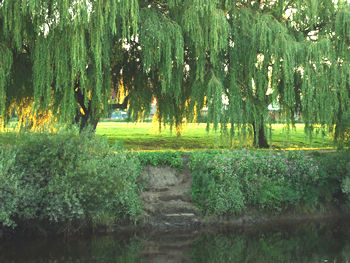
When I was a child we lived on a street that had two areas of land at the top that weren't built on, opposite one another. One was simply grass – not very exciting visually, but obviously useful for children growing up, if you wanted to play football, or indeed just sit on some grass and make daisy chains.
The area opposite was rough ground, wild and covered in weeds. It meant little to the adults, but we gave it a title – "The Wasteland". It was right next to the road, very close to several houses, overlooked on two sides. But it had two trees on it, and a big dip in the middle, and we could make dens in the dip, or under the trees.
I still remember the massive sense of triumph I got, the first time I climbed the tree right to the top. The older ones – the boys – had spent a lot of time working out the best route up – where to put your feet, which bit to grab hold of, and I remember being coaxed up the tree by a friend who had achieved the summit already, and then how I looked out over the houses in the street, feeling very high (literally and in a giddy way), and somehow wiser and cleverer.
. . . urban green spaces are one of the few places where we can experience nature in our increasingly urbanised world. Even small scraps of green space can be vitally important – I spent most of my youth in so-called "waste ground" near home collecting bugs, watching bees pollinate the flowers, poking sticks in ant-hills and being captivated by the antics of garden birds.
Richard Fuller – Feeling the pinch of compact cities
We didn't know who owned that land – or the bit opposite – and we didn't care. They were unfenced, open to the road, and our space, as far as we were concerned.
Perhaps now children don't want to play on wastelands, and parents would be too worried to let them. Too dangerous perhaps.
All the major brownfield sites – the old wastelands in the city centre – have been redeveloped or will be soon. Perhaps I'm the only person who misses these scruffy corners, where urban wildlife took over. We're told we need millions of houses, so I guess we can't afford to waste our land, and must redevelop any spare bits. But some of the best wanders I've had while compiling the pages on this website were through the urban wastelands around Leeman Road and Hungate. Those areas weren't useless or wasted, they were buzzing with urban wildlife.
How close is the nearest patch of "waste ground" to today's generation of young explorers? How many of us live near shiny new blocks of executive apartments built on a "brownfield site"?
Feeling the pinch of compact cities
Ten years ago or so, when I was too old to climb trees, and had left home, and didn't really mourn its loss, our little area called The Wasteland was built on. Two tidy little houses and their small gardens now occupy what was once our small wilderness.
At least the area opposite was still open, still grass for children to play on.
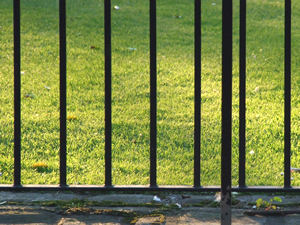
For decades, the grassed area was just as we left it, for years the same. When I passed that way this summer I saw that it has been fenced off. Claimed by a developer, I later found. With some dispute over whether they can do that. It would seem it has no official ownership, and presumably developers search for such places, to take their chance and stake a claim.
It's some decades now since I struggled my way into the world in a small bedroom just down the road from those two small pieces of land.
When one was built on, all those years back, it seemed inevitable, a natural progression, a sign of the times.
The second piece being fenced off, claimed – this once common land – seemed more like robbery, and a potent symbol – if I needed any more of them, of the land-grab, the speculative, desperate, greedy overdevelopment of every tiny piece of land any developer can get their hands on.